This week: September 25, 2026 - Dr. Anthony D. Panzera - Every Neighbor United for Food (Zoom Only)


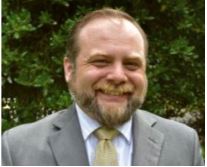
Mercy Health Clinic is one of our partners in the North Bethesda Rotary Community Health Challenge, our club fundraiser that runs through September. On September 24, we’ll hear from Mark Foraker, the Executive Director of the clinic. The mission of Mercy Health Clinic (Mercy) is to provide high quality medical care, health education and pharmaceuticals to medically underserved, low -income residents of Montgomery County, Maryland. All onsite services are offered free of charge.
Founded in October 2000 by members of the social concerns committee at Our Lady of Mercy Church in Potomac, Maryland, Mercy started as an all volunteer clinic occupying a few rooms in the Montgomery Up-County Regional Services Center in Germantown, Maryland. The clinic quickly grew in the number of patients served and the number of volunteer physicians and nurses recruited to serve them. Today Mercy has a small paid staff and nearly 50 volunteer
physicians who provide primary and patient specialty care to nearly 1,800 patients annually. We are currently
providing approximately 7,200 patient appointments annually for our uninsured neighbors.
Mark is a non-profit executive with extensive management and fundraising experience in Montgomery County,
MD including St. Luke’s House (now Cornerstone Montgomery) and Manna Food Center. He has a Master’s
Degree in Nonprofit Management and a PMP certification in project management. Mr. Foraker became
Executive Director of Mercy in June, 2015 and has prioritized establishing partnerships with other social service organizations, implementing operational sustainability.
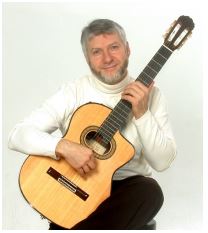
Vladimir Fridman was born and raised in Moscow, Russia, with music a major part of his life. In Moscow Vladimir received his education in music.
He was active in Moscow theaters and in a Philharmonic, and appeared on Russian TV. With Jazz Balalaika Group Vladimir toured Europe, the Middle East and Japan and released four albums. Since his arrival in the United States in 1998, Vladimir frequently performs solo and with leading musicians as member of Music Pilgrim Trio and TransAtlantic Duo and recorded few albums solo and with other musicians. The album Ole Guapa with Gypsy Strings won the WAMMIES Award. Vladimir runs a successful Guitar Studio. Many of his students received awards at the Maryland State Guitar Competition.
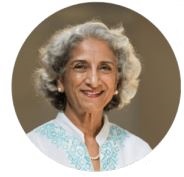
Dr. Geetha Jayaram is the District Governor for District 7620 for 2021-22. A past Rotaractor and recipient of a 2005-06 Rotary Grant for University Teachers, she is a Professor of Psychiatry at the Johns Hopkins Schools of Medicine, Public Health and Nursing. In 1997, from the the Rotary Clubs of Columbia, & Howard West, Dr. Jayaram founded the Maanasi Clinic in Mugalur, Karnataka, India. She has volunteered for National Immunization Days for eradicating polio in India several times.
She started 2 Rotaract clubs & her current Rotary club of Howard West; increased membership in Rotary; taught as facilitator for the Rotary Leadership institute; lectured at many Rotary District Conferences and Zone institutes throughout North America, Asia and Europe. She has procured over 20 grants for domestic and international Rotary work amounting to several million dollars.