This week: September 25, 2026 - Dr. Anthony D. Panzera  - Every Neighbor United for Food (Zoom Only)

September 25: Dr. Anthony D. Panzera  - Every Neighbor United for Food (Zoom Only)
October 2: Charles Hart  - Hold the Standard - Keep the Human
October 9: TBA -
October 16: TBA -

where?
(New location)

Billie-Jean Bensen – Managing a MoCo High School During the Pandemic

February 12th
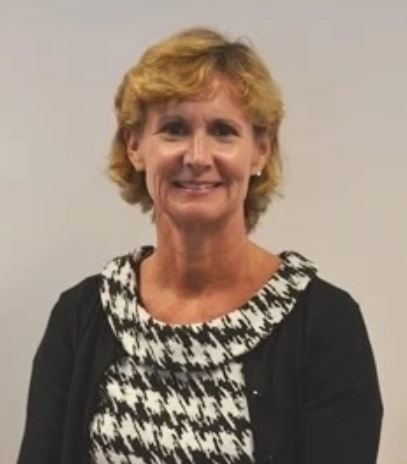
Billie-Jean Bensen, Principal, Rockville High School

Teacher of the Year Award Presented by Kent Mason
Managing a MoCo High School During the Pandemic

Ms. Billie-Jean Bensen is a career educator in Montgomery County Public Schools. She began her career as a social studies teacher in several schools including a department head position before becoming a school-based administrator. For two years, Ms. Bensen was in central office as the Executive Director to the Community Superintendents. She spent 10 years as a middle school principal and she is currently in her eighth year as the principal of Rockville High School. Billie-Jean has had the opportunity to teach and lead in up-county, down-county and mid-county schools. She has held leadership positions in the system’s local leadership chapters and she is currently the lead of the high school principals’ organization. Originally from Connecticut, Billie-Jean and her husband have lived in Montgomery County for her entire working career. She is the proud mom of two MCPS graduates and grandma to one, with one on the way.

Kent Mason – Conservation Work Along the Eastern Continental Divide in West Virginia

February 5th
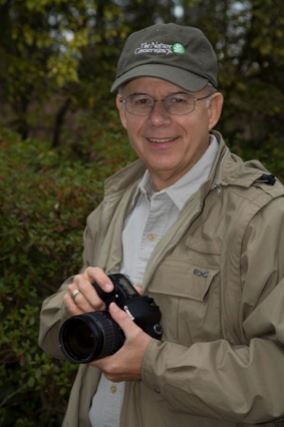
Kent Mason
Kent Mason, one of our club’s Charter Members, is a landscape and nature photographer and conservationist who has been creating a photographic environmental study of extraordinary wild places in the highlands of West Virginia for the past sixteen years. This collaborative effort with The Nature Conservancy resulted in a book titled West Virginia’s Allegheny Mountains: A Photographic Journey, published in 2018. Kent has been involved in photography for over 40 years and has been teaching visual design classes for the past eighteen years. He sells fine art landscape and nature photography in two galleries, has displayed his work in The Nature Conservancy National Headquarters and the National Wildlife Federation headquarters. His images have been published in calendars, books, Nature’s Best magazine, Wonderful West Virginia magazine, etc. and are often displayed on the websites of The Nature Conservancy, the WV Land Trust and many other conservation organizations and in literature. Kent also leads photo tours in the West Virginia highlands, where he lives six months of the year. A large collection of his images can be seen and prints ordered at WVphotographs.com.

My Beliefs on our Natural World, Mankind, and Photography

All plant and wildlife species have the right to live and survive. For thousands of species the preservation of their habitat, wild places, is essential for their survival.

For mankind the value of wilderness preservation is extensive. To name a few: cleaner air and water, opportunities to hike, camp, fish, hunt, kayak, bird watch, or to enjoy the flora, the woods, the quiet open spaces to connect with the natural world. It is our natural heritage.

The spectacular beauty of our natural world inspires people into action to preserve and conserve wilderness for future generations. Great photography of our natural world is a powerful, compelling preservation and conservation tool.

For me, exploring and photographing our natural world is an inspirational journey of renewal where I create compelling images from the heart that can connect with the emotions of others and hopefully engage them in the preservation/conservation movement.

Clarence Hickey – Periodical Cicadas in 2021: An Intersection of Natural History and Human History

January 29th

Montgomery County is a very ethnically and culturally diverse community. This is one of our great strengths. Montgomery County also has some lesser known, yet very numerous, native residents, the 17-year periodical cicadas that visited us with great gusto in 1987 and 2004. They are expected to be with us again in the spring of 2021. The reappearance of the periodicals, on schedule, every 17 years suggests a certain measure of stability in our local environment, a natural sign for us. These cicadas are not dangerous. They do not sting or bite and carry no diseases. They do not eat our vegetation and gardens. They tend to be very numerous, and plague-like at times. When these periodical cicadas appear and are so numerous, they offer wonderful opportunities for observing and studying nature, right in our own backyards and neighborhoods. Cicadas require trees for their life cycle and survival. Without trees, there are no cicadas, and without trees in our neighborhoods, our quality of life would be less. Trees also help to sequester or remove carbon from the atmosphere and thus combat climate change. So, we have something very much in common with our cicada friends, we both need trees! This PowerPoint lecture will demonstrate the intersection of cicada natural history and human history. An example will be a focus on cicadas in Bethesda during 1987. The studies of Benjamin Banneker on periodical cicadas during the 1700s in Maryland will lay the cornerstone for the historical progression of the cicadas every 17 years since then. As we look ahead to this spring of 2021, welcome these native Montgomery Countians back into our neighborhoods.

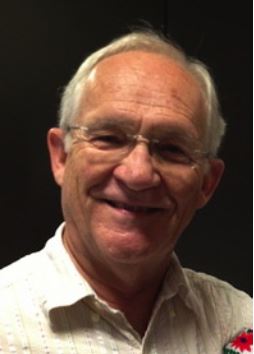
Clarence Hickey holds a Master of Science degree in marine biology from Long Island University. His master’s thesis research studied the blood physiology of fish from Long Island’s estuarine waters, and was published in part in the New Your Fish and Game Journal in 1976, and in the Transactions of the American Fisheries Society in 1983. Clarence lived in Amagansett during 1970-1975 when he worked as a marine biologist on the staff of the New York Ocean Science Laboratory on Montauk. In the early and mid- 1970s, Clarence spent uch time at sea aboard many vessels, including the NOAA Research Vessel Albatross IV, stationed in Woods Hole, MA.

Clarence is a member of several scientific societies and associations, including the American Association for the Advancement of Science, Sigma Xi The Scientific Research Society, the American Fisheries Society, and the American Institute of Fishery Research Biologists. He has more than 150 publications in scientific and conservation journals, magazines, newsletters, technical and government reports, and newspapers.